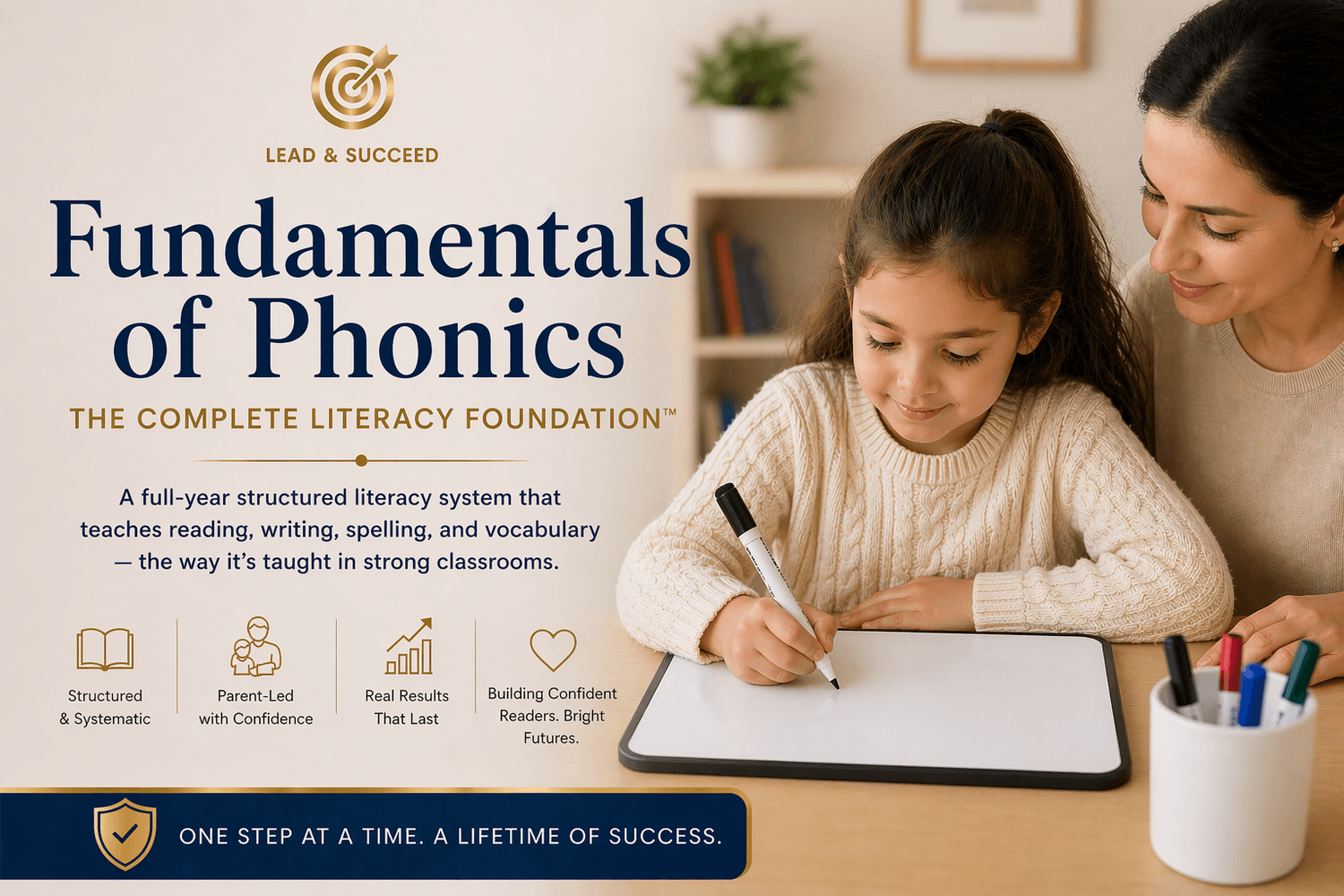
Fundamentals of Phonics
The Complete Literacy Foundation™
A full-year structured literacy system that teaches reading, writing, spelling, and vocabulary — the way it is taught in strong classrooms.
Not worksheets.
Not busywork.
A structured teaching framework that shows parents exactly how to build strong literacy skills step by step.
✔ Full-Year Literacy Progression
✔ Parent-Led Teaching System
✔ Structured Sound and Vocabulary Development
✔ Classroom-Based Teaching Methods
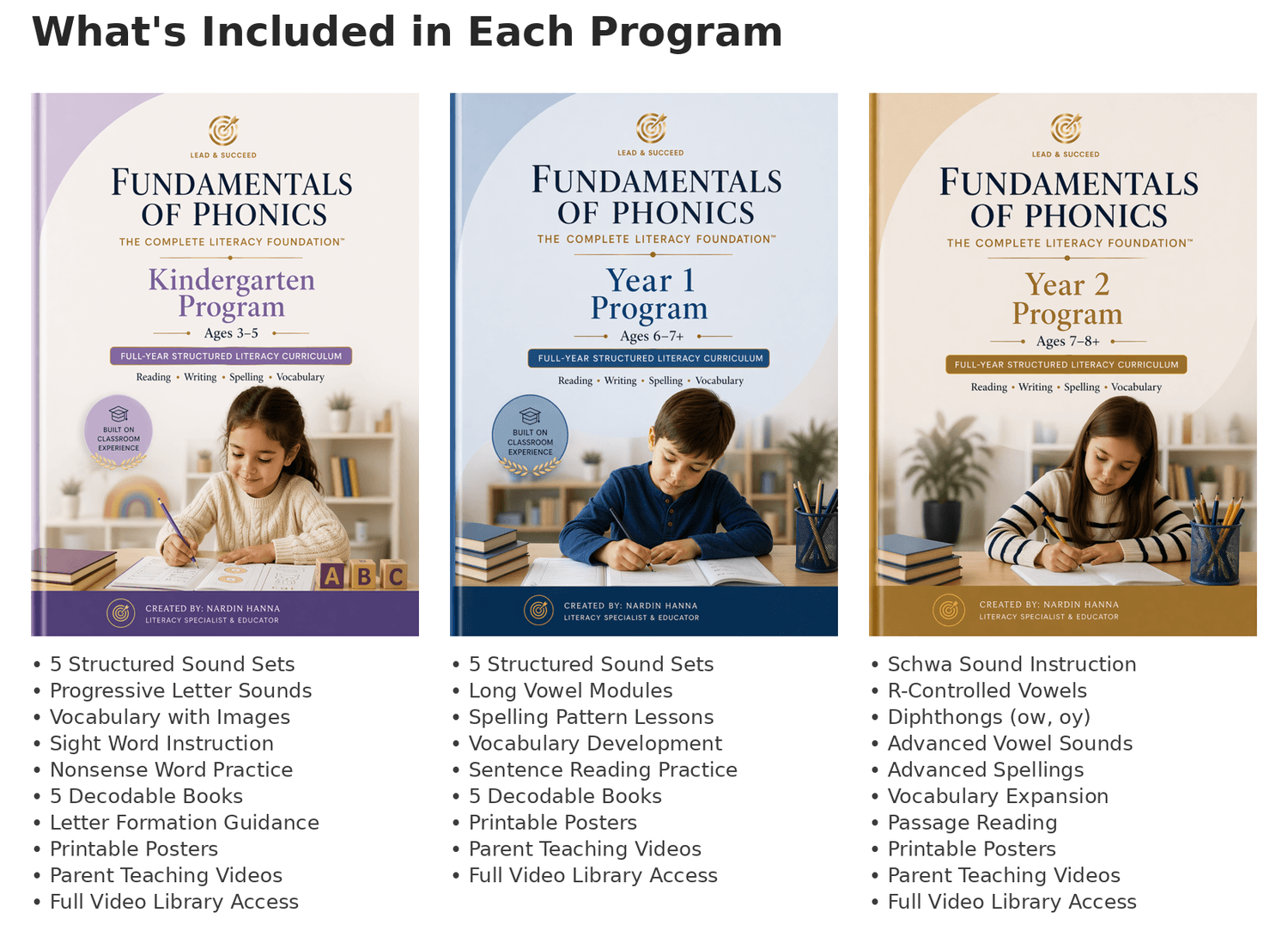
Choose Your Program:
Kindergarten Program (Ages 3–5)
Year 1 Program (Ages 6–7+)
Year 2 Program (Ages 7-8+) Coming Soon
Bundles Available
Many Families Notice These Signs — But Aren’t Sure What To Do
Many parents begin noticing small signs early on — but aren’t always sure what they mean or what to do next.
You may have noticed things like:
• Your child guessing words instead of sounding them out
• Reading that feels slow or effortful
• Difficulty spelling familiar words
• Forgetting words they’ve read before
• Losing confidence when reading becomes harder
• Avoiding reading tasks when possible
For many families, these signs don’t appear all at once. They show up gradually.
And often, parents are already doing everything they can — reading nightly, practising words, trying different resources — yet progress still feels slow.
This is not because parents aren’t trying. It’s usually because the structure behind the learning isn’t clear enough.
Strong literacy skills don’t develop through random practice. They develop through structured teaching. And structure changes everything.
Why Many Literacy Programs Don’t Deliver Real Results
Many resources focus on:
• Isolated worksheets
• Memorisation without understanding
• Random word exposure
• Independent practice without instruction
Children may complete activities…
But they don’t build lasting skills.
Real literacy development requires:
• Structure
• Repetition
• Understanding
• Guided teaching
That’s how strong classrooms work.
And that’s how this system was built.
Why Waiting Often Makes Reading Harder
Reading and writing expectations don’t stay the same.
Each year, students are expected to:
• Read longer texts
• Understand more complex vocabulary
• Follow multi-step instructions
• Learn new content through reading
When literacy foundations are strong, students keep pace.
When small gaps exist, those gaps often grow over time.
What begins as:
• Slight hesitation
• Slower reading
• Small spelling errors
Can later become:
• Reduced confidence
• Increased frustration
• Difficulty keeping up across subjects
This is why strong foundations matter early. Not because children are failing — but because learning becomes easier when skills are built in the right order.
And the earlier structure begins, the more confident students become.
This Is Not a Worksheet Program
It Is a Structured Literacy System
Fundamentals of Phonics was designed to mirror how literacy is taught inside effective classrooms.
Children learn through:
• Carefully sequenced sound instruction
• Vocabulary taught alongside decoding
• Writing and spelling integrated into reading
• Structured repetition across stages
Every step builds on the last.
Nothing is random.
Everything is intentional.
Meet Nardin
Literacy Specialist & Classroom Educator
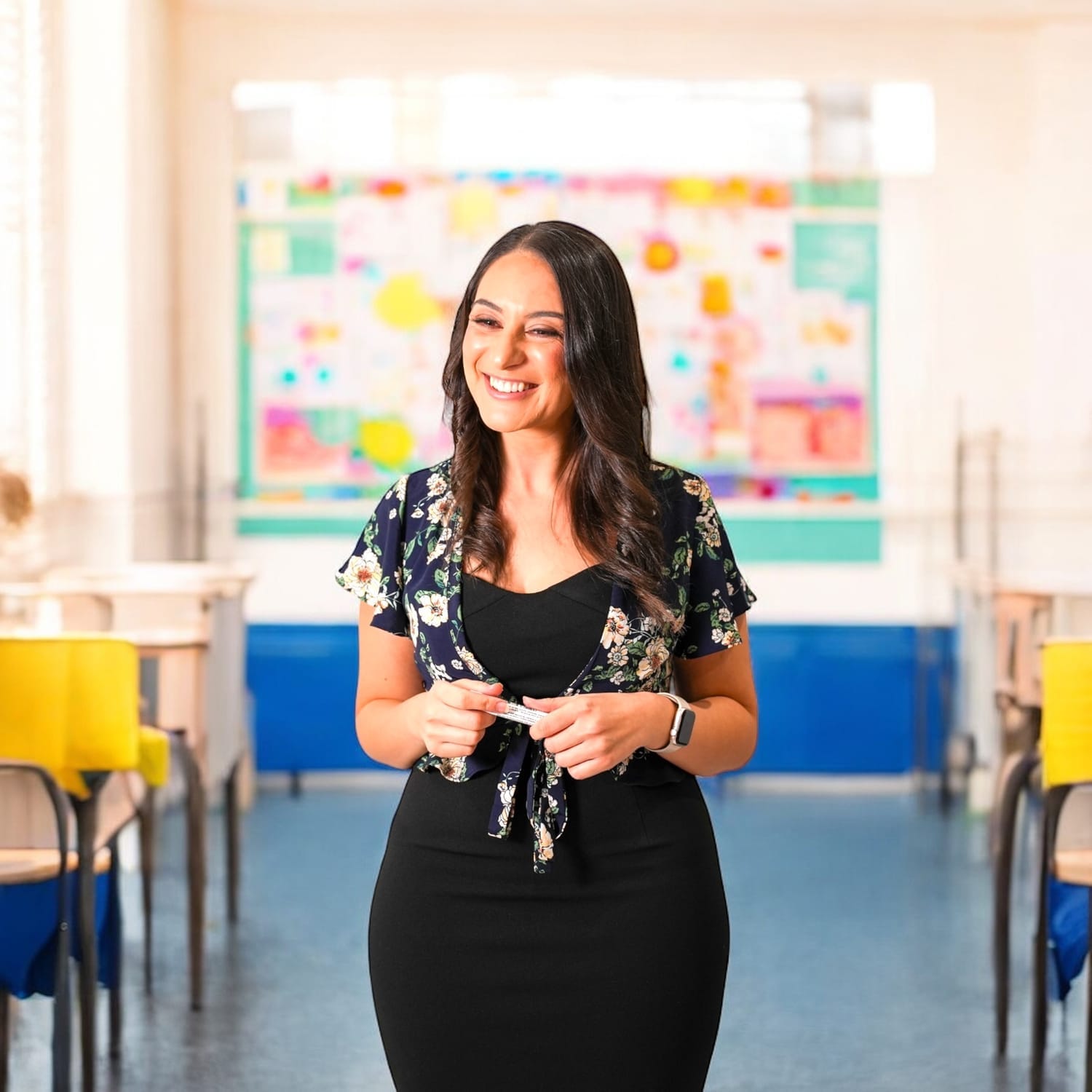
Fundamentals of Phonics was created by an experienced educator with deep classroom knowledge in early literacy instruction.
Professional Experience Includes:
• Primary School Teacher (10+ years)
• Head of Years K–2
• NSW English Syllabus Contributor
• Trained NAPLAN Marker
• Educational Consultant
• Literacy Specialist and Teacher Trainer
This program was built from real classroom experience. Not theory. Not guesswork.
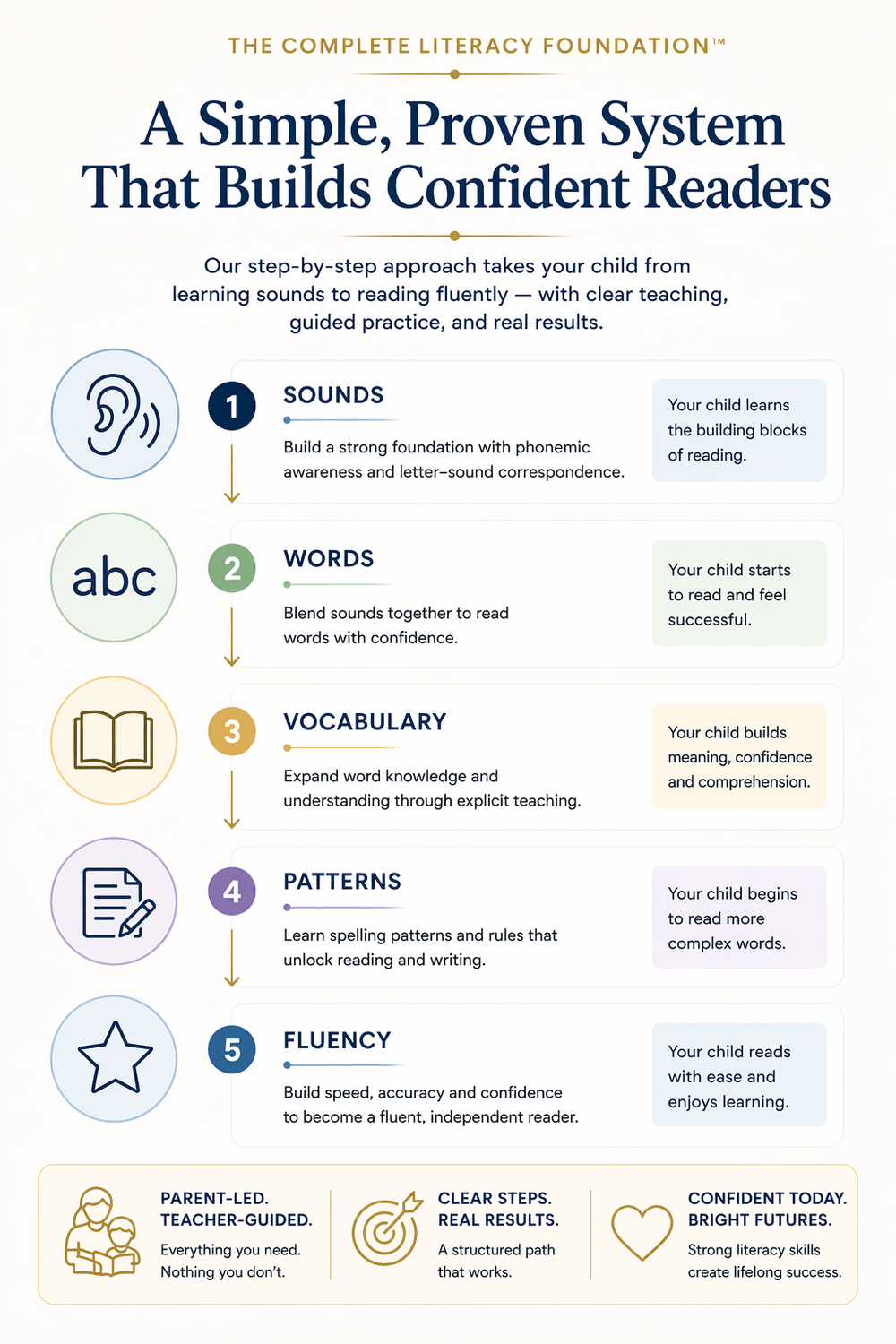
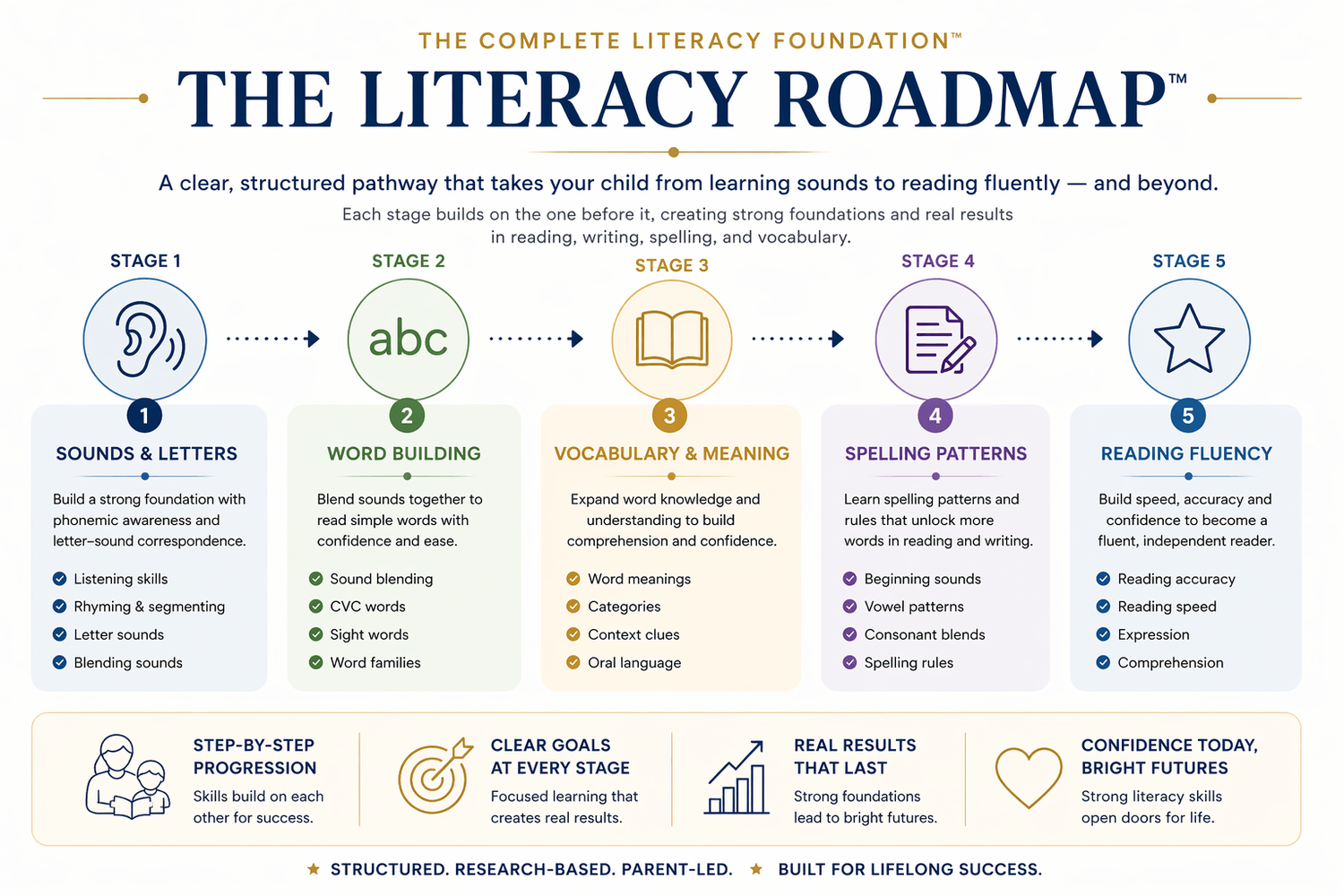
The Literacy Roadmap™
A clear, structured pathway that builds literacy step by step.
This program does not rely on random activities or scattered practice.
Each stage builds on the one before it — strengthening reading, writing, spelling, and vocabulary in a deliberate sequence.
Children move through five carefully designed stages:
What Makes This Program Different
This system goes beyond phonics alone.
It integrates:
✔ Reading
✔ Writing
✔ Spelling
✔ Vocabulary
✔ Language Development
Children don’t just recognise words. They understand them. That difference builds lasting literacy skills.
Literacy Is More Than Reading Words
Strong readers understand how words work. Inside this program, vocabulary is explored alongside decoding.
For example:
A word like tip may be explored in multiple ways:
• The tip of a pencil
• To tip something over
• Giving a helpful tip
Children learn that words can change meaning depending on context.
This is how language develops. And strong language supports strong reading.
What Strong Literacy Looks Like Over Time
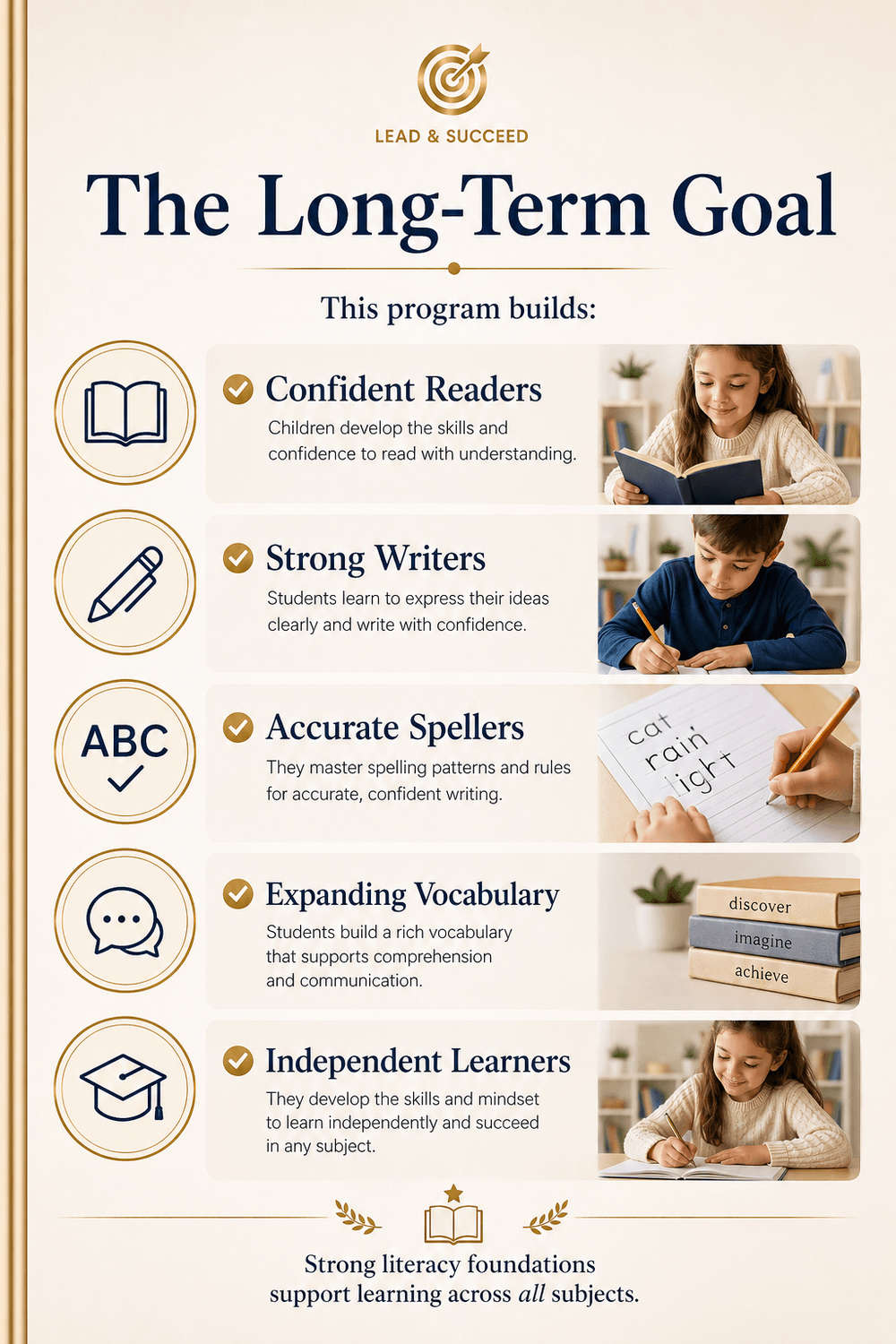
When literacy skills are built through structure and consistency, the changes become visible — not just in reading, but across learning.
Over time, many families notice:
• Reading becoming smoother and more confident
• Fewer spelling mistakes
• Stronger vocabulary understanding
• Greater independence during school tasks
• Increased confidence when approaching new learning
• Less frustration during reading practice
These changes don’t happen overnight. They happen through steady, consistent teaching — supported by a clear plan.
That’s what structured literacy provides. Not quick fixes. Long-term confidence.
And when children feel confident in reading, every subject becomes easier to manage.
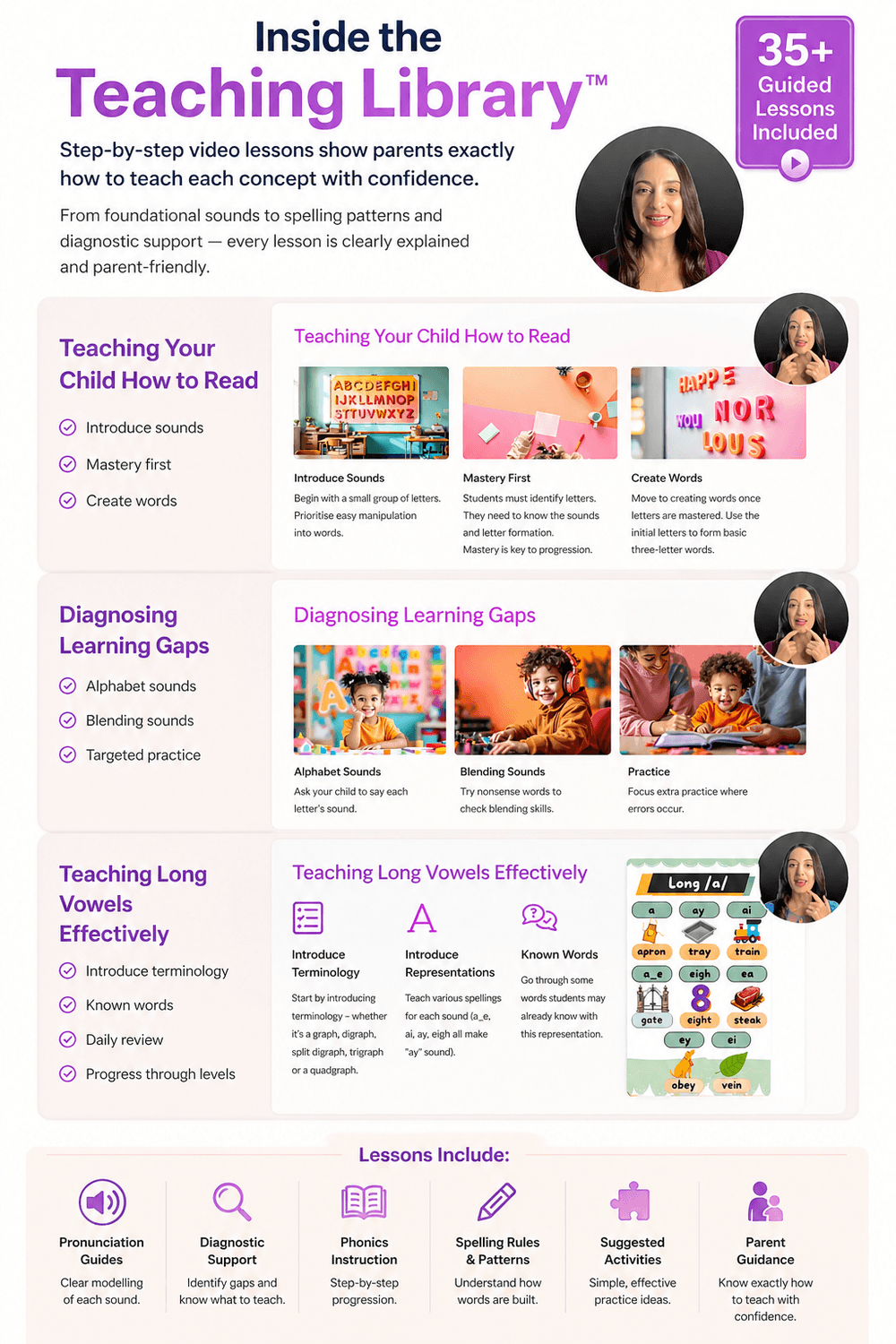
The Teaching Library™
Parents are guided every step of the way.
You are never left guessing.
Inside the video library:
• Alphabet pronunciation lessons
• Sound modelling demonstrations
• Letter formation instruction
• Digraph and blend teaching
• Spelling rule guidance
• Activity modelling
• Diagnostic support videos
Over 35 instructional videos guide you through the teaching process.
More videos are added as new modules are developed.
This Program Is Designed for Families Who:
• Want to understand how literacy is taught
• Value structured learning
• Are willing to teach 15 minutes per day
• Want strong foundations — not shortcuts
• Believe consistency builds confidence
This Program May Not Be Right for You If:
• You are looking for worksheets to keep your child busy
• You want independent activities with minimal involvement
• You prefer occasional learning rather than consistent teaching
• You are looking for entertainment instead of structured instruction
This program requires participation. And participation creates results.
What Commitment Looks Like
Families who see the strongest results typically:
• Teach 5 days per week
• Spend approximately 15 focused minutes per day
• Follow lessons in order
• Use the videos for guidance
Small daily effort creates lasting literacy skills.
FAQ Section
Approximately 15 minutes per day.
The program is designed to fit into daily routines without overwhelming families. Short, consistent sessions are more effective than long, irregular practice.
If your child finds something challenging, simply slow down and revisit the lesson.
The program is structured to allow repetition and extra practice where needed. Reviewing earlier concepts and reinforcing skills helps build confidence and ensures lasting understanding.
Older students can begin by identifying learning gaps using the diagnostic guidance provided in the program.
Once gaps are identified, you can target those specific skills and systematically build forward, strengthening foundations while continuing progress.
No teaching experience is required.
The program provides clear step-by-step instruction, guiding you in the same way teachers are trained to deliver structured literacy lessons. You will be supported with explanations, demonstrations, and teaching guidance throughout.
Yes — and many families use it alongside school programs.
It can be used to:
• Maintain pace with classroom learning
• Strengthen areas of difficulty
• Build confidence ahead of upcoming content
The structured format supports consistent progress regardless of school pace.
You receive lifetime access to the program.
This allows you to revisit lessons, review concepts, and use the materials with multiple children over time.
Build Your Child’s Literacy Foundation With Confidence
Strong literacy doesn’t happen by chance.
It happens through structure. Through consistency. Through guided teaching.
Enter Your Email Address
We HATE spam. Your email address is 100% secure